
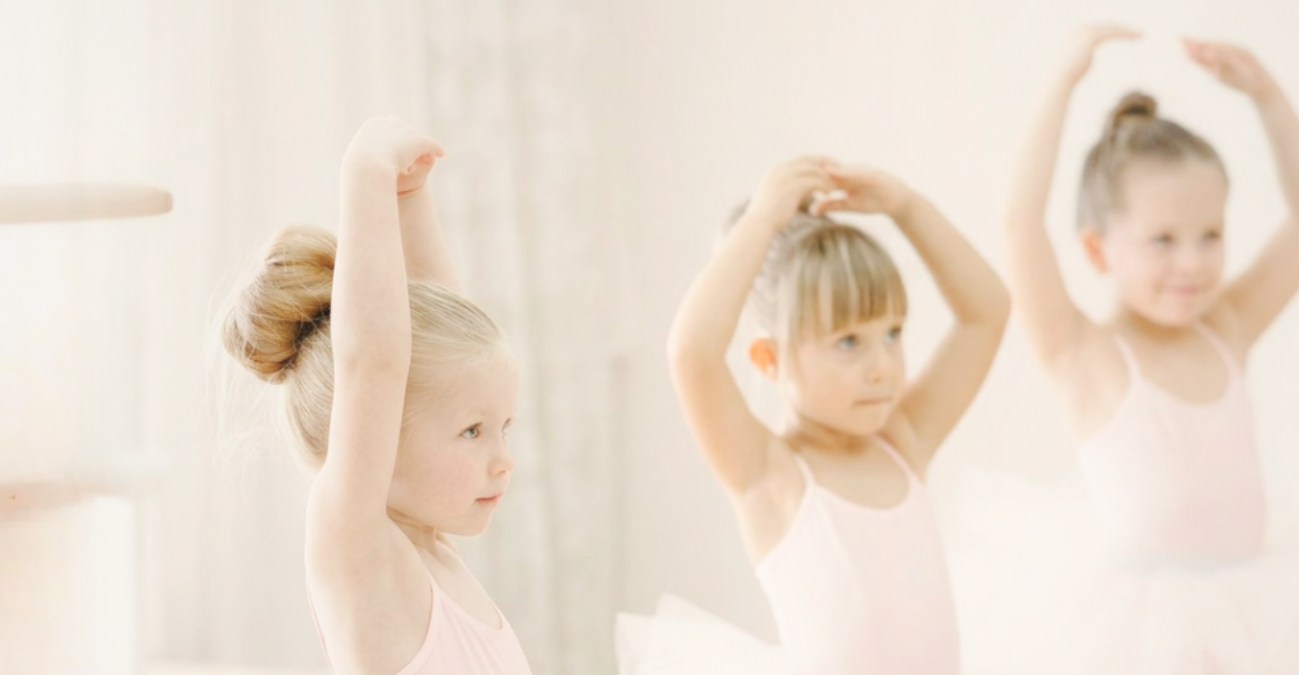

So your daughter just started ballet. Maybe she’s five and twirling around the living room in a leotard she refuses to take off, or maybe she’s older and just found the thing that lights her up. Nobody hands you a manual when this starts. Most of what you actually need to know, you learn from experience, one recital and one class at a time.
Both of my daughters started dancing at three years old. Like a lot of little ones, they did a bit of everything at first: tap, jazz, acro, and ballet. It took a few years before ballet became the thing they both gravitated toward and asked to focus on. I bring that up because if your dancer is still bouncing between styles, that’s not a sign she needs to pick a lane early. For us, it took time for ballet to rise to the top on its own.
Here’s what I wish someone had told me back then.
It’s More of a Commitment Than It Looks From the Outside
From the parking lot, ballet looks simple: drop off, pick up, maybe a recital in June. From the inside, it becomes a rhythm your whole family runs on. Class nights, rehearsal schedules, costume fittings, and eventually competition or intensives if she sticks with it.
The families who feel calmest about this aren’t the ones with the least going on. They’re the ones who stopped fighting how much room ballet takes and just built the calendar around it.
The Gear List Grows Slower Than You Think
It’s tempting to walk into your first dancewear store and buy everything on the “recommended” wall. Don’t. In the first year, most studios genuinely only need a well-fitted leotard and tights, proper ballet slippers (not just any soft shoe), and hair kept fully off the face and neck. A good hairnet and a handful of bobby pins solve more problems than any product you’ll be tempted to buy.
One thing worth asking upfront: whether your studio requires a specific leotard you can only buy through them. One studio we danced at did exactly that. Theirs came from overseas, we couldn’t get them anywhere else, and we had to buy a new color every single year. It was overpriced and there was no way around it. Not every studio operates this way, but it’s worth asking before you assume you can just order whatever’s cheapest online.
Tights are a different story. Amazon has options with comparable quality to Bloch or Capezio at a real discount, and that’s fine for everyday class. Save the name-brand tights for when the studio specifically requires them for a performance, and stretch your budget everywhere else.
If your dancer is trying multiple styles at once the way mine did, expect the gear list to look a little fuller at first, since tap shoes, jazz shoes, and ballet slippers all show up in the same season.
One of the best money-saving tips for beginning dancers: find other dance families whose kids have outgrown their leotards and shoes. Young dancers grow out of these items fast, often before they’re anywhere near worn out, so secondhand gear from another family can save you real money in those early years. Ask around at your studio or check local dance mom groups. There’s usually someone with a bag of barely-used leos and shoes happy to pass them along.
Studio Etiquette Isn’t Written Down Anywhere
Every studio has unspoken rules that nobody emails you. A few that hold true almost everywhere: arrive with hair already done, not doing it in the lobby five minutes before class. Label everything, since shoes, water bottles, and bags all start to look identical in a room full of dancers. Parents generally don’t linger in the classroom doorway once class starts, even if there’s a window. And communicate with the front desk or teacher directly rather than through other dance parents, because the game of telephone rarely helps anyone.
Most of this comes down to one thing: letting your daughter’s teacher run the room, and letting your daughter build independence in that room without you hovering at the edge of it.
The Cost Conversation No One Has Upfront
Tuition is just the beginning. Between shoes, tights, recital costumes, competition fees (if she goes that route), and travel, the real number tends to surprise first-year parents. It’s worth asking your studio directly, early, what a realistic full year looks like, including recital fees, costume deposits, and picture day, rather than discovering it one line item at a time.
Her Ballet Journey Isn’t a Referendum on You
This one’s less practical, more emotional, but it matters. There will be seasons where she doesn’t get the part she wanted, or loses interest for a stretch, or a teacher gives tough feedback that stings to hear secondhand. None of that means you did something wrong, and it doesn’t mean she should quit. Dance has a real learning curve built out of small disappointments, over and over. Your job isn’t to smooth every one of them out. It’s to stay steady while she works through them.
It’s also okay if your daughters end up in different places with it, if you have more than one. Mine did. One leaned into the more serious side, competitions and intensives and the whole track. The other has stayed happily recreational. She has other things pulling at her time and interest too, but ballet and movement have stayed a real love for her the whole way through, just not the center of everything.
It’s a little like school, honestly. Every dancer has her own dance journey, her own strengths, her own areas to work on. I tell both of my girls this all the time: don’t compare. Focus on your own goals, not anyone else’s. That advice has ended up applying to me just as much as it applies to them.
A Few Small Things That Save You Real Headaches
Keep a small emergency kit in your bag from day one: hair ties, extra bobby pins, hair brush, and a spare pair of tights. It’ll save more rehearsals than you’d expect. And follow your studio’s social media and any parent group chat, because most schedule changes get announced there first, faster than official emails.
FAQ
How many days a week does ballet usually require for a beginner? Most studios start beginners at one or two classes a week. It typically increases only if she moves into more serious training tracks or a company/competitive program.
When does she need her first real dance bag? Not right away. A basic tote works fine early on. A proper structured dance bag becomes worth it once she’s carrying multiple pairs of shoes, costume pieces, or heading into competition season.
Is it normal for her interest to come and go? Completely. Many dancers who stick with it long-term had at least one stretch of “meh” early on. Consistency from you at drop-off and pickup matters more than her enthusiasm being at 100% every single week.