
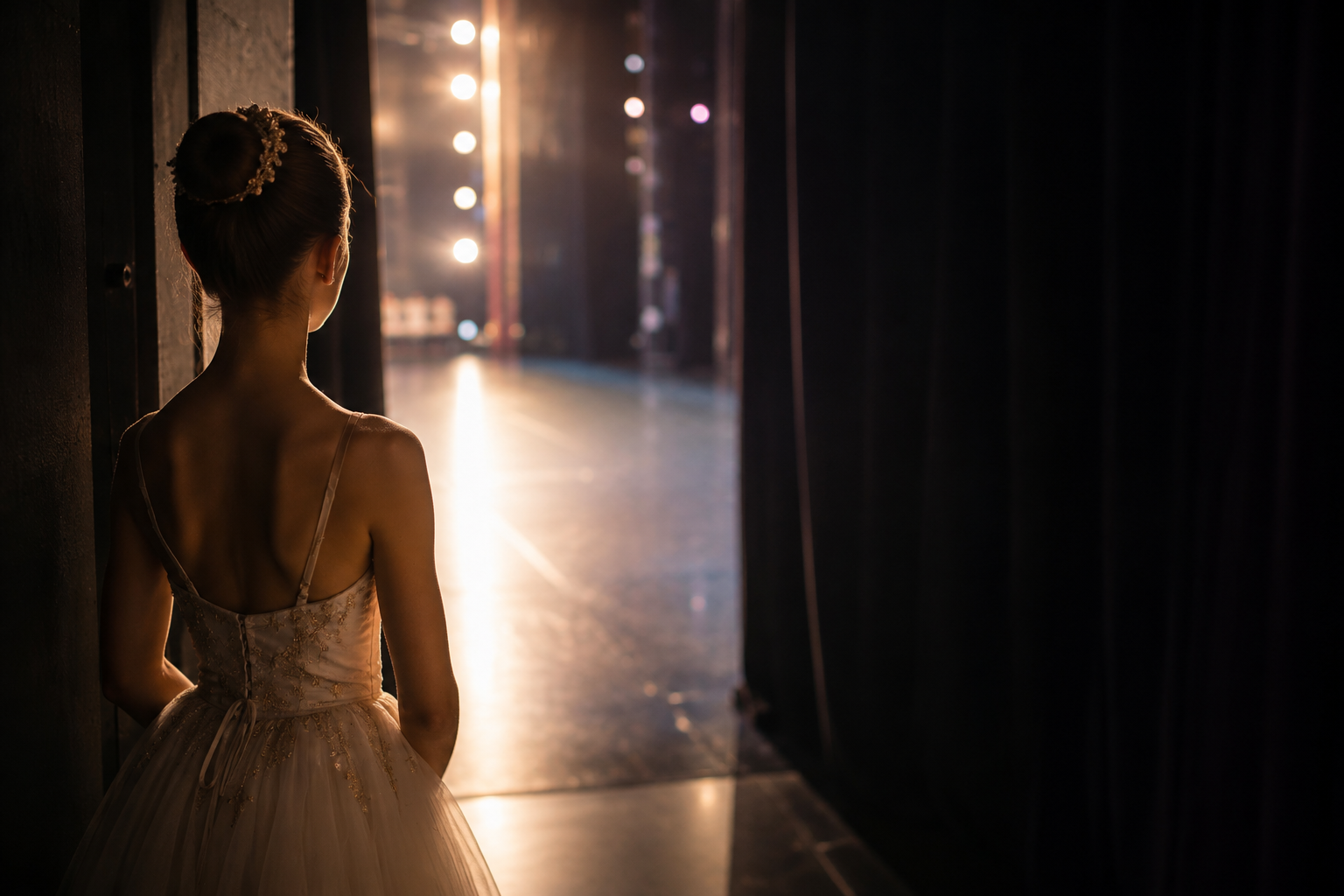

The first time our studio told us we were “required” to attend a commercial competition, I remember thinking I did not want to experience Dance Moms firsthand. After all, we’d spent years in the ballet competition world with its quiet backstage energy, watching the same classical variations over and over in front of adjudicators from elite ballet companies around the world. But then suddenly we were driving up to a hotel and performing in a loud ballroom with neon lights and a gregarious announcer. Honestly, it was a little dazzling in its own way.
If you’re standing where I was, mostly in the ballet world but occasionally pulled into a commercial comp, this one’s for you.
The Short Version
Ballet competitions and commercial (or “general”) competitions aren’t just different vibes. They’re built around different values. Once you understand that, almost everything else (the schedule, the scoring, the costumes, types of venues, even the parent energy in the audience) starts to make sense.
Ballet-focused competitions tend to place greater emphasis on technique, line, artistry, musicality, and classical tradition. Think YAGP, Prix de Lausanne, and regional ballet-focused competitions, although each has its own format and goals. Dancers perform variations from the classical repertoire (or sometimes contemporary pieces, but rooted in strong technical training). The judging panel is usually made up of working ballet professionals like company directors, former principals, and pedagogues.
Commercial competitions are the ones you’ll recognize by name, like NYCDA, JUMP, Rainbow, or a regional DA event. They are built for volume and range. A single weekend might include tap, jazz, contemporary, lyrical, hip hop, and yes, ballet, often all performed by the same dancers across different age groups and styles. The judging leans toward performance quality, entertainment value, and versatility as much as pure technique.
A Quick Comparison
| Ballet Competitions | Commercial Competitions | |
|---|---|---|
| What’s judged | Technique, line, classical artistry | Performance, versatility, entertainment value |
| Typical styles | Classical variations, sometimes neoclassical/contemporary | Jazz, tap, lyrical, contemporary, hip hop, ballet |
| Judges | Ballet professionals, company directors, pedagogues | Choreographers, studio owners, industry professionals |
| Pace of the day | Slower, fewer dancers per session | High-volume, back-to-back numbers all day |
| Costume style | Classical tutus, simple lines | Elaborate, trend-driven, styled for stage impact |
| Typical goal | Scholarships, company/school placement, artistic development | Titles, scores, exposure, convention/workshop access |
Where My Family Actually Lives
My girls are primarily ballet dancers, and that’s where our hearts are. It’s the precision, the discipline, the slow build of a variation over months that keeps us there. But our studio also competes commercially, and when we go, my daughters usually perform their ballet or contemporary pieces rather than jazz or tap numbers. It’s a nice middle ground, honestly. They get the commercial competition energy, the awards ceremonies, and the chance to watch dancers from completely different training backgrounds. And they don’t have to abandon the technique-first style they’ve been trained in. A bonus is when they get to take convention classes and take on hip hop or jazz funk for fun.
If your studio requires commercial comps and you’re primarily a ballet family, I’d gently suggest doing the same where you can. Take the workshop classes and get a call-out or recognition in a ballet one for technique. Plus, a strong classical and/or contemporary piece tends to stand out in a room full of jazz numbers. For better or worse, it reads as different, and different gets noticed.
What Surprised Me Most
The pace. Ballet competitions can feel almost meditative, you might wait an hour to watch fifteen minutes of dancing, and the room is quiet, attentive, formal. It can also be intimidating and you will question why your kid is even at this comp. The level of technique and talent can feel almost professional at times. Commercial competitions move fast. Skill levels range from beginner to almost pro. Numbers are back-to-back, the emcee is upbeat, awards happen constantly throughout the day rather than in one long ceremony at the end. It’s a completely different kind of stamina for the dancers and for you in the audience.
The other thing nobody tells you: commercial comp culture is genuinely warm. There’s less of the quiet-competitive-tension you sometimes feel in the ballet world, and more of a “everyone’s cheering for everyone” energy. I didn’t expect to enjoy that as much as I do.
The Humbling Part
Even though this is predominantly our world, ballet comps have humbled us in a specific way commercial comps haven’t. You have 100+ soloists in an age category vying for the top 12 spots. And you soon learn it’s the same names at each comp. Maybe a different order. It’s very humbling yet inspiring. But you also have to put it into perspective that many of the top contenders dedicate more time in studios than my kids do. You’ll also notice that some of the dancers at the very top of the field have a very different training schedule—often combining school flexibility with intensive daytime studio training.
So Which One Is “Better”?
The better question is: what is this competition for, for your dancer, right now?
If your daughter is aiming toward a pre-professional ballet track (company apprenticeships, summer intensives at places like SAB or Houston Ballet, conservatory programs) then the ballet competition and audition circuit is where that path gets built. If she’s chasing versatility, choreography opportunities, or just loves the performance side of things, commercial competitions offer exposure and experience that ballet-only training doesn’t.
And if you’re like us, required to show up in both worlds, you don’t have to pick a side. You just have to figure out how to bring your dancer’s real strengths into whichever room you’re standing in that weekend.
What’s Your Experience?
I’d love to hear from other dance moms on this one. Is your dancer primarily in one world or moving between both? Did the switch to commercial (or ballet) competitions surprise you the way it surprised me? Drop a comment below. I read every one.
Heading to your first competition weekend regardless of which type it is? The Ultimate Dance Competition Packing List walks through exactly what to bring so you’re not scrambling backstage.